in today’s fast-paced technology landscape, optimizing embedded systems has become a critical factor for delivering high-performance solutions. Whether it’s for industrial automation, IoT devices, or consumer electronics, efficient embedded service implementation ensures that hardware and software resources are used optimally. At the heart of this optimization lies hardware–firmware partitioning, a strategy that significantly influences system speed, reliability, and power efficiency. By carefully dividing tasks between hardware and firmware, engineers can enhance performance while maintaining scalability and cost-effectiveness.
Understanding Hardware-Firmware Partitioning
Hardware-firmware partitioning involves determining which functions should be implemented directly in hardware and which should be handled by firmware. Hardware tasks, often embedded in ASICs, FPGAs, or specialized processors, are capable of executing operations with high speed and low latency. Firmware, on the other hand, provides flexibility, allowing system updates, bug fixes, and feature enhancements without altering the physical components.
The decision to partition effectively impacts system performance in several ways:
- Execution Speed: Critical operations implemented in hardware execute faster than in firmware alone.
- Flexibility: Firmware-based operations can be updated post-deployment, supporting adaptability.
- Power Efficiency: Hardware implementations can be more energy-efficient for repetitive or computationally heavy tasks.
- Cost and Complexity: Overloading hardware increases design complexity and cost, while excessive reliance on firmware may slow system responsiveness.
Engineers must carefully balance these factors to optimize performance, reliability, and maintainability.
Benefits of Optimal Partitioning
One of the key benefits of thoughtful hardware-firmware partitioning is performance predictability. When latency-sensitive tasks are implemented in hardware, systems respond faster and more reliably under varying conditions. This is especially important in real-time embedded applications, where delayed responses can lead to safety hazards or operational failures.
Moreover, partitioning enhances maintainability. Firmware updates can address bugs or improve algorithms without the need to redesign hardware components. This not only reduces time-to-market for enhancements but also prolongs the usable life of the embedded system.
Cost optimization is another critical advantage. Allocating only performance-critical tasks to hardware reduces material costs while keeping firmware flexible for non-critical or evolving functionalities. Companies providing embedded product design services often guide clients through these trade-offs, ensuring systems meet both technical and business objectives.
See also: Industrial Automation Technology Explained
Design Considerations for Effective Partitioning
Effective hardware-firmware partitioning requires a thorough understanding of system requirements and constraints. Engineers typically follow a structured approach:
- Task Profiling: Identify tasks based on execution frequency, latency sensitivity, and computational demand.
- Hardware Feasibility: Determine which tasks benefit most from hardware acceleration and assess area, power, and cost constraints.
- Firmware Flexibility: Decide which functionalities require post-deployment adaptability or frequent updates.
- System Integration: Ensure seamless communication between hardware and firmware, avoiding bottlenecks.
- Testing and Validation: Simulate system performance under real-world workloads to verify partitioning decisions.
Balancing these elements ensures that embedded systems perform optimally without unnecessary cost or design complexity.
Role in Real-Time Embedded Applications
In real-time embedded systems, such as industrial controllers or automotive ECUs, hardware-firmware partitioning becomes even more critical. Tasks like signal processing, motor control, or safety monitoring often demand minimal latency and deterministic execution. Implementing these functions in hardware ensures rapid response, while non-critical monitoring or reporting tasks can reside in firmware.
This separation also enhances fault tolerance. By offloading critical tasks to hardware, systems are less susceptible to firmware bugs or unexpected software crashes. Furthermore, firmware can incorporate diagnostic and logging features, enabling predictive maintenance and reducing system downtime.
Impact on Power and Energy Efficiency
Power consumption is a major concern in embedded systems, particularly for battery-operated or remote devices. Hardware implementations of compute-intensive tasks typically consume less power per operation compared to firmware executing the same task on a general-purpose processor. By offloading high-demand processes to hardware and leaving less critical operations to firmware, designers can achieve significant energy savings without compromising functionality.
Advanced low-power strategies, such as dynamic voltage and frequency scaling, can further enhance efficiency when combined with effective hardware-firmware partitioning. This holistic approach is often employed in IoT and wearable devices, where power efficiency directly affects usability and user experience.
Software-Hardware Co-Design
Hardware-firmware partitioning is closely tied to the concept of software-hardware co-design. Early collaboration between software and hardware engineers allows for informed decisions on which tasks to implement in firmware versus hardware. This collaboration ensures that system constraints, such as memory, processing speed, and power budget, are considered holistically.
Co-design methodologies also streamline the verification process. Hardware tasks can be tested in simulation alongside firmware algorithms, identifying integration issues before physical prototypes are built. This reduces development time and increases confidence in system performance.
Practical Examples and Use Cases
Consider a smart camera system. Image preprocessing and high-speed edge detection are computationally intensive and benefit from hardware acceleration. Motion detection and alert generation, which may require frequent updates based on evolving algorithms, are better implemented in firmware. Proper partitioning ensures real-time performance while maintaining flexibility for future improvements.
Similarly, in medical devices like portable ECG monitors, signal filtering can be handled by hardware, while user interface management and connectivity features are implemented in firmware. Such partitioning guarantees reliability and responsiveness without sacrificing adaptability.
PCB Considerations
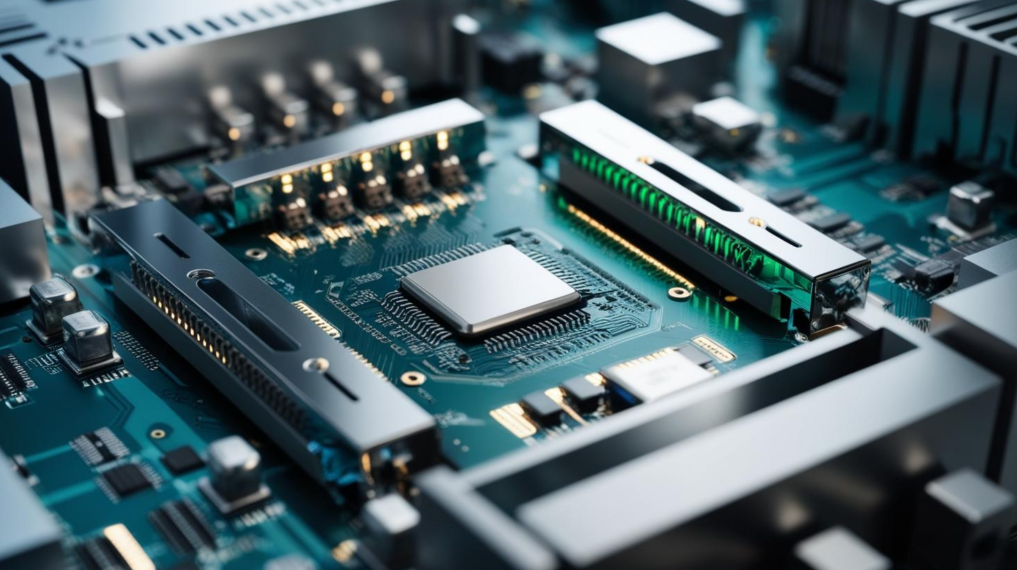
The physical layout of components, such as the PCB board, can also influence partitioning decisions. Proximity between hardware modules, bus widths, and memory placement affects communication speed and latency. Engineers must consider these constraints when deciding which tasks to assign to hardware and firmware.
For instance, Tessolve works with clients to optimize both functional partitioning and PCB design, ensuring that embedded systems achieve peak performance while maintaining manufacturability and cost efficiency. The combination of thoughtful partitioning and smart PCB design reduces bottlenecks and improves overall system reliability.
Conclusion
Hardware-firmware partitioning is a cornerstone of high-performance embedded systems. By strategically dividing tasks between hardware and firmware, engineers can optimize speed, flexibility, power efficiency, and cost. Early collaboration and careful system profiling ensure that embedded systems meet stringent real-time and operational requirements.
In practice, efficient hardware-firmware partitioning, combined with careful PCB design, ensures embedded systems operate reliably and efficiently. Companies often work with partners experienced in these areas, such as Tessolve, to balance performance, flexibility, and energy efficiency, helping devices meet real-world requirements while remaining scalable for future updates.